Understanding the Color Quantization Challenge

TL;DR
- This article explores the technical hurdles of reducing image color palettes without losing visual fidelity, covering essential algorithms like k-means and median-cut. You'll learn how these processes impact ai image enhancement, background removal, and restoration services, providing practical insights for photographers to improve their digital workflows and overall photo quality.
What is the color quantization challenge anyway
Ever wonder why a beautiful sunset in your high-res photo suddenly looks like a cheap 90s arcade game when you save it for the web? That’s the color quantization challenge in a nutshell—it’s the messy, technical struggle of cutting down millions of colors into a tiny palette without making the image look like garbage.
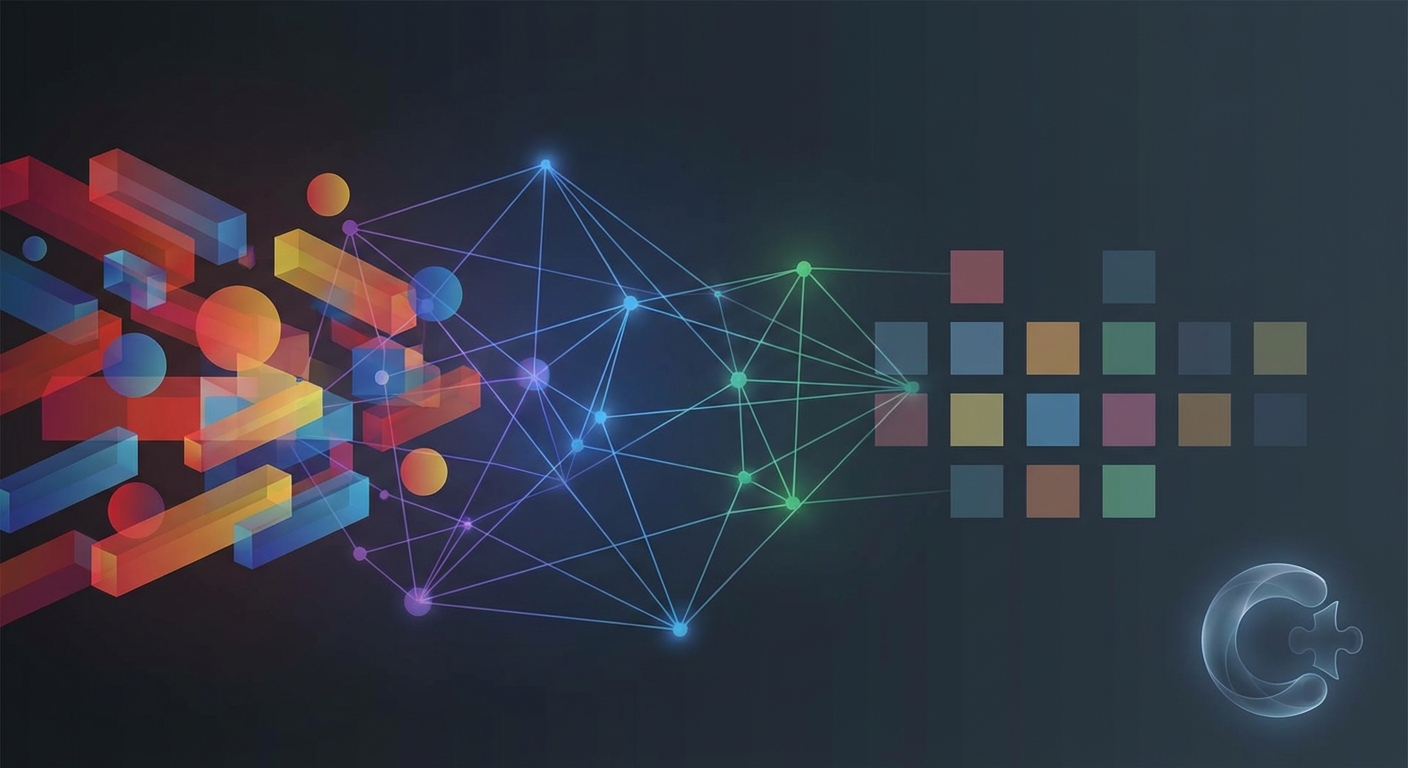
At its core, color quantization is just the process of reducing the number of distinct colors in an image while trying to keep the visual quality high. Think of it like trying to paint a masterpiece with a box of 8 crayons instead of 64; you’ve gotta be real smart about which ones you pick.
Most of our modern gear shoots in 24-bit true-color, which gives us about 16.7 million possible colors. That is a massive amount of data. According to a study in the Journal of Visual Communication and Image Representation, we need this reduction because many devices or file formats (like older displays or certain web assets) just can't handle that much info. (Escaping unsustainable digital interactions: Toward “more ...)
The real headache is the tug-of-war between compression and aesthetics. You want a small file size so your site loads fast, but you don't want your client's skin tones looking splotchy. It's a "large-scale combinatorial optimization problem" as noted by M. Emre Celebi (2023), which is just a fancy way of saying it's really hard for a computer to pick the "best" 256 colors.
If you're a creator, this hits hardest in your gradients. You know that smooth transition from deep blue to orange in a sky? When quantization goes wrong, you get banding or "false contours." Instead of a smooth fade, you see ugly, distinct stripes of color.
- Skin Tones: In portraiture, subtle shifts in highlights can turn into weird, flat patches of gray or orange, totally ruining the professional vibe.
- Print Quality: If your file is quantized poorly before hitting the inkjets, the printer won't have the data it needs to blend colors, leading to "posterization" where everything looks like a flat graphic.
- Healthcare & Retail: This isn't just for art; in medical imaging, losing color depth could hide a tiny detail in an X-ray, and in retail, it makes a product look "off-color" to a buyer.

Honestly, most of us just hit "Export" and hope for the best, but understanding how these ai algorithms actually pick those representative colors is the first step to better quality.
Next, we’re gonna dive into the specific algorithms—like median-cut and k-means—that do the heavy lifting behind the scenes.
The technical side of things and algorithms
So, you’ve probably noticed that some of your photos look great as a jpeg, while others—especially those with smooth skies—turn into a total "banding" nightmare. It’s not just bad luck; it’s the math under the hood of your editing software deciding which colors to kill and which to keep.
Back in the day, when memory was expensive and processors were slow, we had to be real clever about how we handled 16 million colors. The median-cut algorithm was the first big hero here, basically treating the whole color spectrum like a giant block of wood that it chops into smaller boxes.
- How it works: It looks at the range of colors and splits the "box" at the median point, making sure each new box has roughly the same number of pixels.
- The Pros: It’s fast and predictable, which is why it’s still a staple in basic image processing.
- The Cons: It’s a bit "dumb" because it cares more about the number of pixels than how much those colors actually matter to the human eye.
Then we have Octree quantization, which is like a memory-efficient filing cabinet. According to research published in Computer Graphics Forum, it builds a tree structure where each "branch" represents a bit of color depth, bucketing colors by branching down from the most significant bits to the least.
It’s great because it only uses as much memory as you have colors, but it can get a bit messy with "color shifts" where a subtle pink suddenly decides it's actually a light gray.
If you're using high-end ai photo tools today, you’re likely relying on k-means clustering. This isn't just a simple "chop," it’s more like a group of people finding their natural cliques in a crowded room.

It’s an iterative process, meaning the ai keeps refining the palette until it finds the most representative "centroids." It’s way more accurate for skin tones and complex textures than the old-school methods.
A 2023 survey by M. Emre Celebi (as mentioned earlier) notes that while k-means is much slower than median-cut, it is the "backbone" of professional tools because it minimizes the actual mathematical distortion.
In a project at the University of Washington regarding visual misinformation, researchers used color quantization to detect if an image was tampered with. This works because when you paste an object from one image into another, the "quantization noise" or quality settings usually don't match. If one part of a photo has different mathematical "fingerprints" than the rest, it's a dead giveaway that the image was a fake.
Honestly, as a creator, you don't need to write the code, but knowing that k-means is doing the heavy lifting explains why your high-quality exports take a second longer. It’s literally "thinking" about which blue is the best blue for that sunset.
Next up, we're gonna look at how this actually plays out when you're trying to fix those old, faded family photos.
How quantization affects ai image enhancement
If you’ve ever tried to remove a background from a portrait and ended up with a subject that looks like they were cut out with rusty kitchen scissors, you’ve felt the sting of quantization. It’s not just about making files smaller; it's about how the ai "sees" the difference between a stray hair and a stray pixel.
When an ai tries to strip a background, it relies on finding "edges"—those sharp transitions where the subject ends and the world begins. Color quantization simplifies the image's palette, which can actually help the ai by grouping similar background tones together. But if it goes too far, the subtle shadow that defines a jawline might get merged into the wall behind it.
- Edge Clarity: By reducing millions of colors into a few "representative" ones, the ai can more easily distinguish a red shirt from a green forest. However, M. Emre Celebi (2023) notes that color shifts—where a color is represented by its nearest neighbor—can cause "rare" colors to disappear, which might include the very highlights that define an edge.
- The Hair Struggle: This is the ultimate test. Fine details like wisps of hair or lace often share very similar color values with the background. If the quantization process is too aggressive, these fine details are "quantized" into the background color, leading to that dreaded "helmet hair" look.
- Smart Algorithms: Modern tools like Snapcorn—which is an ai-powered platform for enhancing and upscaling images—use advanced logic to keep these edges sharp. Instead of just chopping colors, they use spatial information to ensure the contrast at the borders remains high enough for the ai to do its job.
The real magic happens when we take a tiny, 200-pixel thumbnail from 1998 and try to turn it into a 4K masterpiece. Here, the ai has to "invent" pixels that aren't there. Quantization plays a huge role in how the ai guesses those missing colors.

When you blow up a photo, the ai uses the existing quantized palette as a map. If that map is low-quality, you get "artifacts"—those weird, blocky squares or "mosquito noise" around the edges of objects.
- Colorization AI: For black and white restoration, the ai assigns colors based on textures. If the underlying data is heavily quantized, the ai might struggle to see the difference between a silk tie and a wool coat, leading to flat, unrealistic colorization.
- Avoiding Posterization: As discussed in the ScienceDirect overview, "posterization" happens when smooth gradients turn into distinct bands. In upscaling, a good ai will "dequantize" the image first, essentially smoothing out those bands before adding new detail.
Honestly, it's a balancing act. You want enough quantization to keep the ai focused on the important shapes, but not so much that you lose the soul of the photo.
Next, we’re gonna look at why your skin tones sometimes look like they belong on a mannequin instead of a human.
The human factor and perception
Ever wonder why two photos with the exact same "math" can feel totally different to your eyes? It’s because our brains don't actually see pixels—we see relationships, and honestly, we’re pretty easy to fool if you know the right tricks.
The truth is, 16.7 million colors is mostly just "flexing" by tech companies. Our eyes are amazing, but they have hard limits on what they can actually distinguish in a split second.
- Perceptual Uniformity: We are way more sensitive to changes in green and yellow than we are in blue. This is why a "mathematically perfect" color reduction often looks like hot garbage in a portrait—it might save a blue sky but totally wreck a skin tone.
- The 256 Color Magic: Most people can't tell the difference between a high-bit image and a well-quantized 8-bit one. As noted in the Handbook of Image and Video Processing (2005) by Ping Wah Wong, 256 colors is usually enough to be considered "continuous tone" if the palette is picked smartly.
- Dithering Tricks: This is the "noise" you see in old GIFs. It’s basically placing two different colored pixels next to each other so your brain "blurs" them into a third color that isn't even there.
When we talk about "human" perception, we have to ask: which humans? A lot of the early tech for color was developed with some pretty narrow views, which still affects ai photo editing today.
A 2024 paper from the University of Washington (as discussed earlier) points out that old-school skin tone scales, like the Von Luschan tiles, were actually used in some pretty dark "scientific racism" studies.
Modern creators are now pushing for better standards. For instance, the Monk Skin Tone Scale was developed to replace the old, limited Fitzpatrick scale. It gives ai a much broader range of 10 tones to work with, ensuring that when an image is "quantized," it doesn't accidentally erase the nuances of darker skin.

If you're a photographer, reclaiming these methods means being intentional. You aren't just hitting "export"—you're making sure the math respects the person in the frame.
Next, we’re gonna look at how this all fits into the bigger picture of e-commerce and why your product shots might be lying to your customers.
Practical tips for your workflow
So, you’ve spent hours perfecting a shot, only to have the colors fall apart during export? It happens to the best of us, but honestly, a few tweaks to your workflow can save those gradients from looking like a blocky mess.
Choosing the right format is basically your first line of defense against ugly banding. While we all love a good jpeg for its small size, it’s a lossy format that uses Discrete Cosine Transform (DCT) to compress data. This often causes "blocking artifacts" in smooth areas. If you’re working on a sunset or a studio portrait with smooth backdrops, try WebP or HEIC; they handle compression much more gracefully.
- PNG-24 vs PNG-8: If you need transparency, stick to PNG-24. PNG-8 forces a 256-color palette (true quantization), which is fine for a logo but will absolutely murder a high-end product photo.
- Bit-Cutting: A common trick to speed up processing is cutting bits from each channel. For example, cutting 3 bits from an 8-bit channel leaves you with 5 bits, which reduces your color levels from 256 down to just 32 per channel. This is a one-way ticket to "false contours" or heavy banding, so keep it to 1 bit max if you can.
- Profiles: Always embed your srgb profile. Without it, browsers might quantize your colors differently, making your vibrant reds look like dull bricks.
If you’re dealing with a massive catalog, you can’t manually tweak every export. This is where ai photo editors and scripts come in handy. Many creators are now using Python with libraries like OpenCV to batch-process images.
import cv2
import numpy as np

# Note: This is a basic example of uniform quantization.
# Professional tools use much more complex clustering like k-means.
def reduce_color_depth(image, divisor=8):
    return (image // divisor) * divisor
img = cv2.imread('landscape.jpg')
quantized_img = reduce_color_depth(img, 8)
We’re seeing a big shift toward perceptual quantization, where the ai doesn't just crunch numbers but actually "looks" at what humans notice. Tools like Snapcorn are already moving in this direction, prioritizing skin tones over less important background pixels.
Next, we’re wrapping things up with a look at where this tech is headed next.
Summary of the challenge
So, we've basically seen that color quantization is way more than just a "save for web" button. It’s this wild balancing act between keeping your file sizes small and making sure your gradients don't look like a set of stairs.
- Math vs. Perception: Algorithms like k-means are great, but they don't always "see" skin tones the way we do. As mentioned earlier, using tools like the Monk Skin Tone Scale helps ensure ai doesn't flatten out human diversity.
- Workflow is King: Choosing the right format—like moving from jpegs to webp—can save your work from ugly banding before it even starts.
- AI is a Partner, Not a Cure: Even the best upscaling tech, like what we saw with snapcorn, needs a solid color palette to start with or you'll just end up with high-res noise.

Honestly, just keep experimenting with your export settings. Sometimes a little bit of "dithering" or a slightly larger palette is all it takes to keep a photo looking real instead of plastic. At the end of the day, your eyes are still the best judge of quality, even with all this fancy math doing the heavy lifting.