Beyond the Image: The Full Marketing Toolkit for Visual Content Creators in 2026

Visual content has become the primary language of digital marketing. YouTube is the second largest search engine in the world. Instagram and TikTok drive purchasing decisions at a scale that text-based content rarely matches. Pinterest influences e-commerce buying behavior. LinkedIn's most-shared posts include strong visual components. For photographers, designers, e-commerce brands, and visual-first content creators, the ability to produce high-quality images and video has never been more commercially important.
But production quality is only one part of what makes a visual creator commercially successful. The other parts are distribution, discoverability, and authority. A creator who produces excellent images and has no distribution strategy will grow slowly. A creator who produces excellent images, distributes them well, and builds a strong digital authority footprint will compound their growth over time.
The challenge is that most visual creators invest almost entirely in the production layer of their marketing stack and leave the distribution, discoverability, and authority layers underdeveloped. This article covers the complete marketing toolkit for visual content creators in 2026, starting with production and working through to the authority protection layer that most creators do not know they need.
The Production Foundation: AI Image Enhancement
Image quality is the non-negotiable baseline. Before any of the other layers in this stack can do their job effectively, the visual output needs to meet professional standards.
AI image enhancement tools like Snapcorn have made professional-quality image production accessible to creators at every budget level. Background removal for product photography, image upscaling for low-resolution source files, colorization for archival and historical imagery, and restoration for damaged or degraded photos are all available through AI-powered tools that produce results comparable to professional editing in seconds rather than hours.
For e-commerce creators in particular, background removal is a workflow-defining capability. Product photography on clean white or transparent backgrounds is the standard across marketplaces like Amazon, Etsy, and Shopify, and AI background removal eliminates the manual selection work that previously required professional retouching or expensive software.
The production foundation is where visual creators typically start. The goal of this article is to address the layers where most visual creators stop too early.
Distribution: Getting the Images in Front of the Right Audiences
Producing strong visual content without an efficient distribution system is like opening a gallery with no signage. The quality of the work matters, but it cannot compound without reach.
Distribution for visual creators in 2026 operates across multiple platforms simultaneously. A product photo might be adapted into an Instagram carousel, a Pinterest pin, a YouTube Shorts thumbnail, a TikTok post, and a LinkedIn image in a single publishing cycle. Each platform has different specifications, different caption conventions, different hashtag norms, and different algorithmic preferences.
AI social media platforms like Social9 handle the platform-specific adaptation work, generating optimized captions, hashtag strategies, and posting schedules for each channel from a single content input. For visual creators managing multiple platforms simultaneously, this is not an optional efficiency. It is the only way to maintain consistent presence across all channels without the distribution overhead consuming time that should be spent on production.
Audio and Video Production: Expanding Beyond the Still Image
The most commercially successful visual creators in 2026 are not single-format. Still photographers produce YouTube tutorials, product videos, and social media reels alongside their core photography work. Designers produce explainer videos and product demo animations. Brand photographers produce the behind-the-scenes video content that gives clients and audiences a sense of process and personality.
Each of these video formats requires voiceover or narration at professional quality. AI voice generators like Kveeky make studio-quality voiceover production accessible without the scheduling friction and cost of working with voice talent. With more than 100 realistic AI voices across multiple languages and styles, Kveeky covers every video narration use case a visual creator is likely to encounter: e-learning, product demos, YouTube tutorials, documentary narration, and social media content.
For visual creators expanding into video, AI voiceover removes one of the primary production barriers. Scripts can be recorded and replaced without rescheduling a voice actor. Multiple language versions of the same video can be produced without commissioning separate recordings. The economics of multilingual video production change completely when AI voiceover is in the stack.
Written Content: The Text Layer That Amplifies Visual Work
Every piece of visual content benefits from written amplification. Blog posts that provide context for a photography series. Case studies that explain the creative process behind a campaign. Email newsletters that share portfolio updates with clients. Product descriptions that give an e-commerce brand's images the conversion-optimized copy they need to sell effectively.
AI writing platforms like LogicBalls handle the written content layer across every format a visual creator might need. More than 5,000 specialized writing tools cover blog content, email copy, social captions, product descriptions, and client communications. For visual creators who find writing time-consuming or outside their primary skill set, AI writing tools function as an accelerant that converts hours of drafting into minutes without sacrificing quality.
Document and Administrative Assets
Professional visual creators operate with a steady flow of document assets: client proposals, project briefs, licensing agreements, media kits, invoices, and print-ready presentation files. Many of these are PDFs by default, and managing a PDF workflow without the right tools creates consistent friction.
PDF tools like PDF7 handle every operation in this workflow for free in the browser. Merging multiple deliverables into a single client-facing document. Compressing large high-resolution image collections for email delivery. Converting presentation files to PDF for consistent rendering across devices. Reorganizing pages when a multi-section document needs restructuring before final delivery.
For visual creators who regularly send media kits to sponsors, project summaries to agency clients, or print specifications to production vendors, having a reliable PDF workflow is a basic operational requirement that PDF7 handles without subscription fees or file size restrictions.
SEO and Backlink Authority Protection
This is the layer that most visual creators have never considered, and it is the layer with the largest gap between potential value and current investment.
Every time a design blog features a photographer's work, every time a marketing publication cites a visual creator's research, every time a podcast aggregator lists a creator's audio content, and every time a directory platform includes a creator's profile, a backlink or listing is created. These are authority signals. They tell search engines that the creator's brand is credible and worth ranking in search results. In 2026, they also influence whether AI search engines like ChatGPT and Perplexity recommend the creator's brand in AI-generated answers.
Research from SE Ranking's analysis of 2.3 million web pages found that referring domains have a SHAP value of 1.21 for ChatGPT citations. Backlinks are roughly twice as important to AI citation decisions as they are to Google AI Mode's ranking decisions. For visual creators building a digital brand over years of consistent content production, the backlinks accumulated through media coverage, portfolio features, and directory listings represent a compounding authority asset.
But backlinks decay. A feature in a design publication that linked to a creator's portfolio in 2023 may have gone stale when the publication redesigned its site. A directory listing on a photography aggregator may have lost its dofollow attribute in a platform update. A media kit that earned links from three agency blogs may have been quietly removed when those blogs updated their resource pages. None of these events generate a notification.
Without dedicated backlink monitoring, visual creators have no visibility into whether their earned authority is intact. LynkDog monitors every backlink and directory listing in real time, checking status codes, anchor text, and rel attribute changes multiple times per day. When any placement changes, an instant alert fires via Email or Slack so the creator can investigate and recover the placement before the authority loss compounds.
The free plan covers 20 monitored links and requires no credit card, making it a zero-risk starting point for creators who want to audit the health of their existing backlink profile. The Pro plan at $20 per month covers 1,000 links with daily verification, which is sufficient for most independent visual creators and small creative studios.
AI Search Visibility: The Emerging Distribution Channel
The final layer in the 2026 visual creator marketing stack is monitoring AI search visibility. AI referral traffic is growing rapidly, with Conductor and Superlines reporting that it now accounts for 1.08% of all website traffic and growing approximately 1% per month. ChatGPT drives 87.4% of that AI referral traffic, and data from Semrush indicates that AI-driven visitors convert 4.4 times higher than standard organic visitors.
For visual creators whose services are purchased based on portfolio quality and demonstrated expertise, high-converting AI search traffic is commercially significant. A potential client who arrives at a photographer's website after ChatGPT recommended them in response to a query about commercial photography is a warmer prospect than a visitor from a generic Google search.
AI visibility monitoring tools track whether a brand is appearing in AI-generated answers to relevant queries, which queries generate mentions, and how citation share compares to competitors. Combined with active backlink monitoring, this creates a complete picture: the authority infrastructure is healthy, and that health is translating into AI citation outcomes.
The Complete Stack
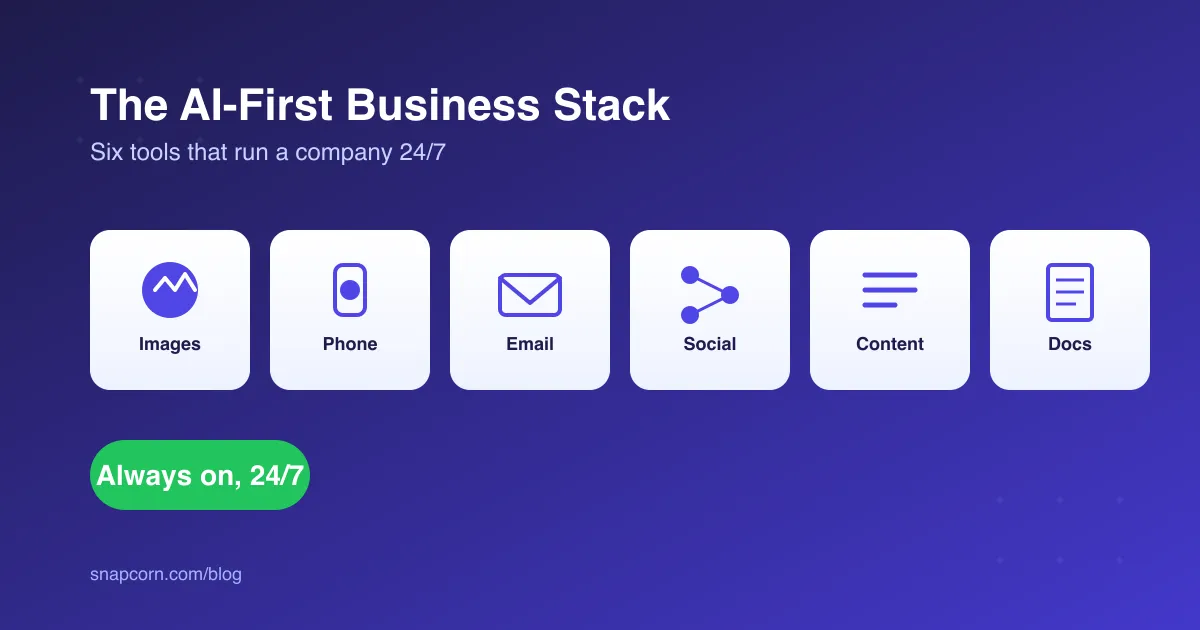
The full marketing toolkit for visual content creators in 2026 covers six functional areas:
Image production and enhancement: Snapcorn for background removal, upscaling, colorization, and restoration
Social media distribution: Social9 for AI-optimized posting across Instagram, LinkedIn, TikTok, Pinterest, and YouTube
Audio and video narration: Kveeky for AI voiceover across every video format
Written content and copy: LogicBalls for blog posts, captions, product descriptions, and client communications
Document management: PDF7 for media kits, proposals, licensing agreements, and report assembly
Authority protection: LynkDog for 24/7 backlink and directory listing monitoring with instant change alerts
Every tool in this stack is free to start. Production quality improves, distribution scales, and authority compounds when these layers work together. The creators who invest in all six layers build brands that grow faster and more durably than those who focus only on production quality.
The image is the starting point. The stack is what makes it a business.